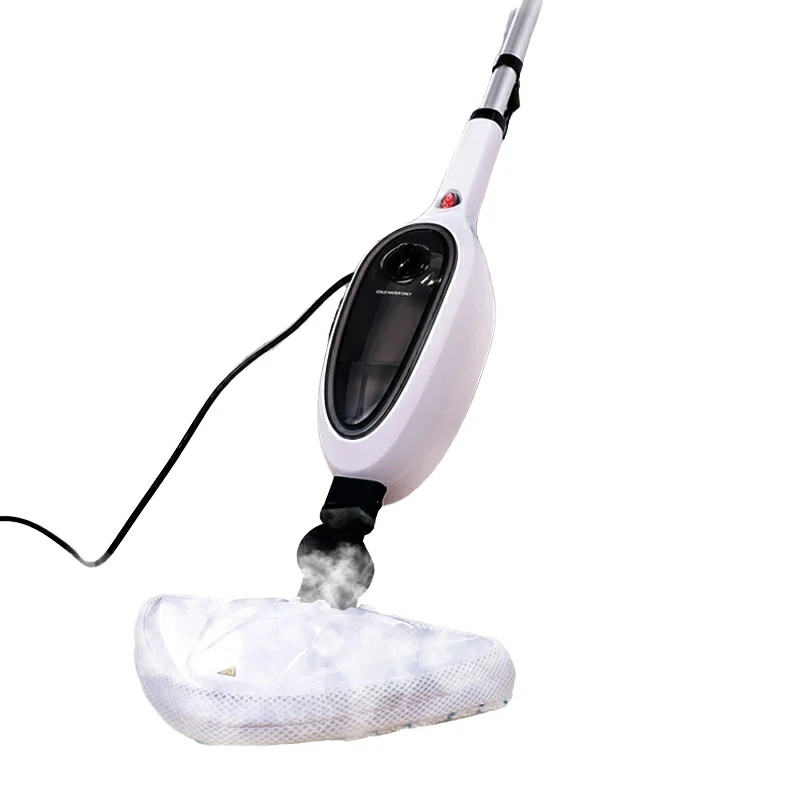
The correct use of a steam mop requires following the entire process of "preparation-preheating-cleaning-finishing" to ensure efficient cleaning and extend the machine's lifespan. Based on authoritative operating guidelines, the specific steps are as follows:
1. Preparation before use: Cleaning and installation
Clean the floor: First, use a broom or vacuum cleaner to remove hair, grit, and other debris to avoid clogging the steam vents or scratching the floor mat.
Proper assembly: Insert the mop handle into the main unit and ensure it is locked securely. The mop head should be smoothly engaged. When installing the microfiber floor mat, smooth out the four corners to ensure a tight seal.
Fill the tank with water: Open the water tank cap and fill it with room temperature distilled water or purified water to the MAX line. Never use tap water (it easily causes limescale buildup) or add cleaning agents (it corrodes the machine). The maximum water capacity is usually 1.5L.
2. Preheating: Wait for the indicator lights to illuminate.
Plug in the power and observe the indicator lights:
Solid blue: Heating in progress;
Flashing yellow: Heating up;
Yellow off: Water temperature has reached over 100℃, pressure is stable, and it is ready for use.
Preheating time is approximately 3–4 minutes. Do not use it prematurely based on experience, as insufficient steam may affect the cleaning effect.
3. Cleaning Operation: Adjust according to material, advance at a steady speed.
Adjusting the steam level:
Wooden floors: Select the low setting (steam lasts approximately 12 seconds per cycle) to avoid prolonged steaming;
Tile/stone: Select the high setting (steam lasts approximately 20 seconds per cycle) to deal with stubborn stains.
Advancing technique: Maintain a steady advance speed of 30–40 cm per second, with the steam nozzle 1–2 cm above the ground;
For oily areas, spray a fixed spot for 3 seconds before wiping horizontally to improve emulsification and peeling efficiency.
Make flexible use of accessories: replace the curved nozzle to clean corners and crevices, and use the leather brush to clean glass or stovetops.